
Resilience and flexibility: the new values of hospital architecture
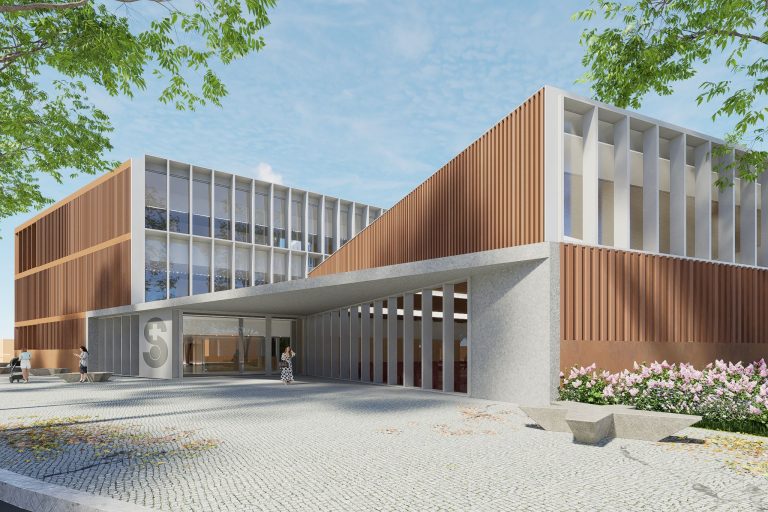
The recent fight against COVID-19 has left several teachings of great relevance to hospital architecture. Since then, features such as preparation, prevention and adaptation have been revalued within hospital design.
Historically, the structure of the hospital has been changing, from the basilica type, the cross shape or the block, to give a direct response to the diseases of the moment. Today, needs are changing more and more quickly, and that is why a modular and flexible structural system is required that establishes bases that can be transformed and adapted as required.
Challenges to confront
The first aspect that the hospital of the future will have to face is the obvious upward demographic trend that exists today. People are increasingly longevous and, in Spain, the population of 60 years is larger than that of 5. When designing these new centres, consideration must be given to the extension that these will require over time, but also to the adaptation of use to the ageing patient, which requires more facilities and comforts.
The second challenge is faced with the change in the use that society makes of the hospital. In the current model, the patient is diagnosed from symptoms, a therapy is prescribed, heals and leaves. The model of the future part of the medical check-up and routine prevention against the genetic predisposition of each individual, a diagnosis based on symptoms and a personalization of treatment and care, as well as prosthetic-based regeneration treatments and other systems. What this entails is that the population will go routinely to the hospital, so it will have to be more integrated into the cities and into the inhabitant’s lives.
As we have seen, pandemics change completely, and with them, the need for the hospital to be organised. That is why the building must be modifiable and adaptable to the new needs that each one requires. This must also include the facilitation of good physical structures to health personnel so that they can work optimally even in the most tense moments.
Technological advances
Everything that can be automated will be automated. This does not mean the disappearance of staff, but an improvement in care times, with novelties such as:
- The digital patient: The treatment of a disease in the hospital is in the background to allow me to move on to online care.
- Distance hospital care: Professionals will use messaging tools to communicate with patients and other doctors about health problems, through increasingly complete platforms.
- Transformation of the health system: With the application of artificial intelligence, robotics and virtual reality, we move from a limited system to a transversal and global system.
- 4P Medicine: predictive, preventive, personalized and participatory.
- Virtual consultations, distance operations through 5G, augmented reality or robotic arms for surgical operations will become increasingly important.
An example of this is the new surgical block at SJD Barcelona Children’s Hospital, equipped with high-tech operating rooms.
What we can expect from the hospitals of the future
In order to face the challenges mentioned above, the building time of a hospital must be considerably reduced. In Spain it can take up to 12 years from planning until the end of a project, but in this time three cycles of medical innovation have passed that will make the hospital obsolete once built.
That’s why all buildings must have emergency plans against pandemics to be able to clearly organize and segregate spaces in record time, as well as have the ability to adapt to the functional changes required at the moment, even to increase their capacity in all spaces, not only during their construction, but also later. The hospital of the future must be flexible and mutant.
Post-pandemic hospitals must be organised, with clear and orderly circulations, but above all they must be resilient to meet the needs of the future.
PINEARQ has worked under this premise on projects such as the Hospital del Mar, which has been adapting for years to current needs under small reforms that interfere as little as possible with routine activity. Recently, the WILSON consortium included this hospital as one of the pilot cases of its technology innovation project.
If you have been interested in this article, you can read more here:
- Technology in healthcare spaces for paediatric patients (Pinearq, 2023)
- WILSON: Digital Twins (Pinearq, 20224)