
The healthcare architecture of the modern movement
The following text is the first of a three-part compilation of notes from the lecture given by architect Albert de Pineda, director of Pinearq, as part of the Master’s program at Campus Clínic in Barcelona on May 30, 2025.
The modern movement that emerged in the early 20th century sought functionality, simplicity, and efficiency in design, showing great concern for hospitals and health centers, linking architecture and healthcare.
This trend of continuous improvement and research in healthcare architecture was highlighted by leading specialized publications. One example is the monographic issues on hospitals published in 1937 by the magazine Arquitectura i Urbanisme del Sindicat d’Arquitectes de Catalunya, which brought together outstanding and innovative projects from the United States and Northern Europe and reflected on how services should be designed for proper construction and interior organization within the hospital.

Modern architecture radically transformed the way healthcare spaces were conceived. In contrast to the monumental hospitals of the 19th century, modern architects proposed buildings where functionality, hygiene, natural light, and the relationship with the environment became the pillars of design. These works not only responded to specific medical needs, such as the treatment of tuberculosis, but also explored how architecture could actively participate in the healing process.
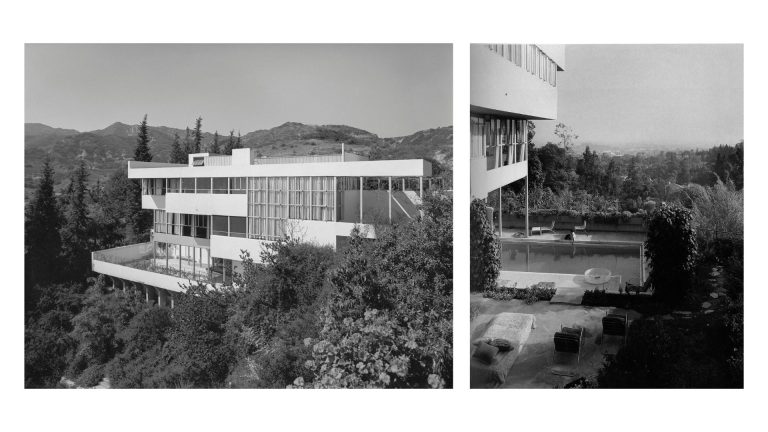
This change was clearly evident in key projects from the early decades of the 20th century, such as the Lovell House (1929). Designed by Richard Neutra in Los Angeles for Dr. Philip Lovell, this home is an icon of the international style and a pioneering work in integrating the principles of hygienist medicine into a domestic environment. Lovell, a naturopathic physician, understood health as a holistic practice that included diet, exercise, sunlight, and fresh air. The architect responded to this vision with a house that prioritized sun exposure, cross ventilation, and the use of industrialized materials such as steel and glass. Although it is a single-family home, its design foreshadows many elements that would later become essential in modern hospital design.
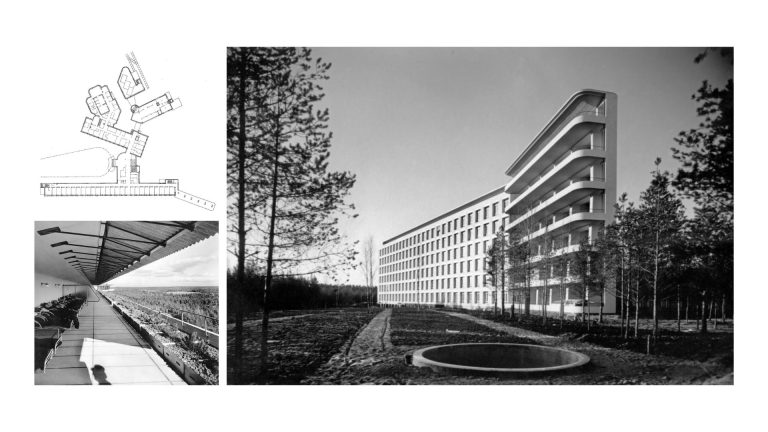
Similarly, the Paimio Tuberculosis Sanatorium (1929–1933) in Finland, designed by Alvar Aalto, is a building that not only meets the functional requirements of a medical center but is also conceived as a “medical instrument” in itself. Aalto designed everything from the furniture to the orientation of the rooms, which receive morning sunlight to promote rest in the afternoon. Even the color of the ceilings was chosen so as not to tire patients who spent long hours lying down, and the windows were designed to provide a view of the green spaces outside. Here, architecture is not merely a container, but an active tool for healing.
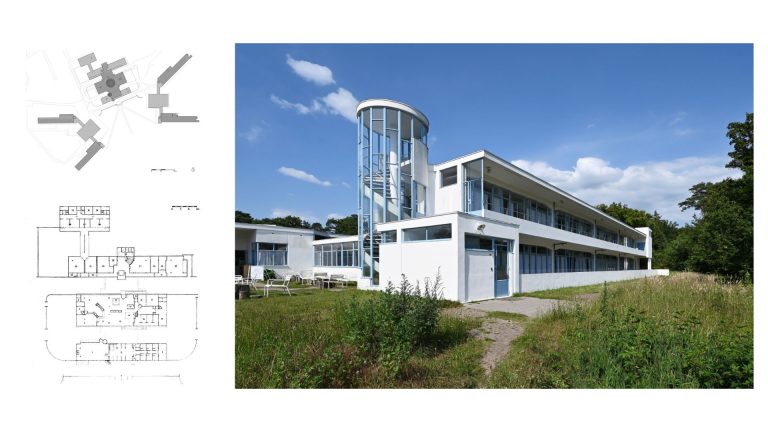
Another contemporary example to the Paimio Sanatorium was the Zonnestraal Sanatorium (1925-1928) in the Netherlands, designed by architects Jan Duiker and Bernard Bijvoet. It is characterized by its lightweight structure, glass facades, and open terraces, becoming a radical example of functionalist rationalism. The intensive use of glass and reinforced concrete allowed for bright, well-ventilated spaces with a strong visual connection to nature. Beyond the architectural, Zonnestraal also incorporated a progressive vision: it was not just a sanatorium, but part of a social complex that included workshops and schools, designed to reintegrate the sick into active life.
These three works laid the foundations for a new way of thinking about healthcare buildings. Their emphasis on functionality, patient experience, and relationship with the natural environment remains key in contemporary hospital architecture. Today, concepts such as evidence-based design, sustainability, and the humanization of the clinical environment have deep roots in these historical examples. Understanding them is not just an exercise in architectural memory, but a way to inspire current solutions focused on the physical, psychological, and social well-being of users.
Modernity with a local twist: Barcelona as a laboratory
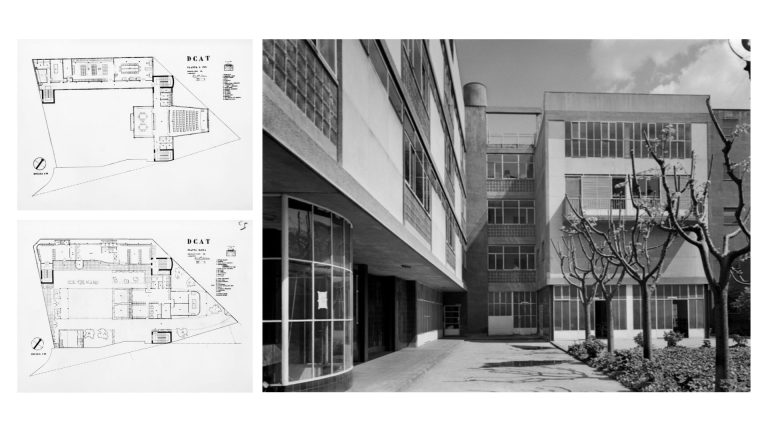
The dissemination of these ideas also had an impact on Catalan architecture, especially through the work of GATPAC (Group of Catalan Architects and Technicians for the Advancement of Contemporary Architecture). Inspired by CIAM’s proposals, they applied the principles of rationalism to healthcare projects such as the Barcelona Tuberculosis Dispensary (1935-1938), designed by architects Josep Lluís Sert, Joan Baptista Subirana, and Josep Torres. The layout of all the rooms, the circulation system, and the treatment of the facades respond to a rigorous adherence to the program and the solar abacus, regardless of the constraints of the site. It is a model of the insertion of rationalist concepts into a dense fabric, which is implicitly criticized by the strict functionality of the building itself.
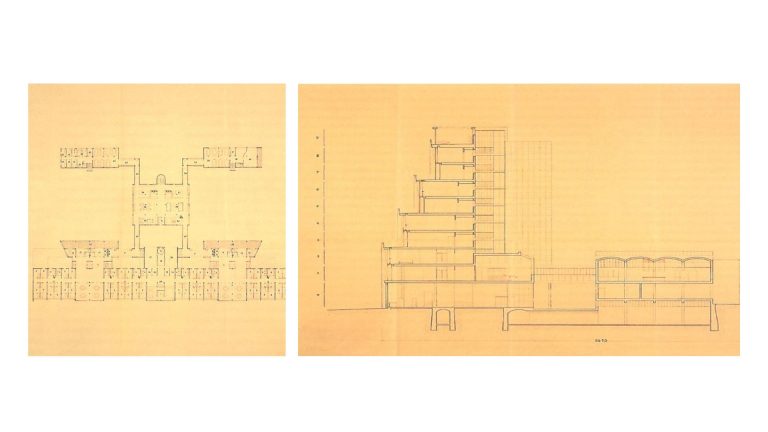
Less well known but no less important is the project launched in 1937 for the new Vall d’Hebron hospital. Although it was never built, the project represented a radically modern vision of public healthcare: pavilions organized according to specialty, connected by walkways and surrounded by green spaces, and terraced terraces to facilitate natural light. This design foreshadowed many contemporary hospital models and showed how architecture could be put at the service of universal and modern healthcare in the midst of the Republic.
This post is the first chapter of three articles that make up the transcript of the conference 100 Years of Hospital Architecture. You can download the full article here or read the second part at the following link.