
Premises for future diagnostic areas
The 19th century was characterized by two major events in medicine and hospital architecture that revolutionized the field:
In 1895, Wilhelm Röntgen, a physical and mechanical engineer, discovered electromagnetic radiation in today’s frequency range known as X-rays. This discovery, which earned him the Nobel Prize for Physics in 1901, initially found no medical application. However, it soon proved to be a real revolution, both for the healthcare sector and for hospital architecture. In 1915, the first X-ray apparatus was presented to entire teams of physicians, ushering in a new era in diagnostics.
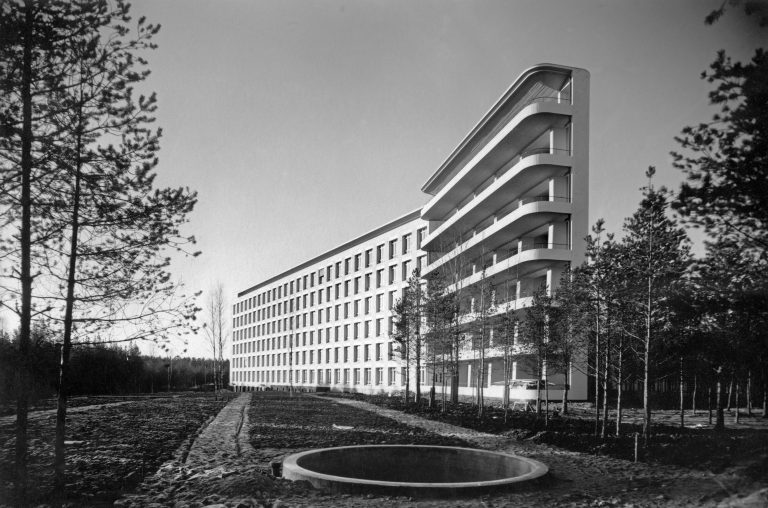
The next crucial event was the Spanish flu epidemic, which brought a radical transformation in hospital architecture between 1918 and 1920, and led to a new hospital model being established. An emblematic example of this new type of design is the Paimio Sanatorium, designed by Alvar Aalto: a modern hospital, characterized by humanized environments that placed not only the treatment but also the well-being of the patient at the center.
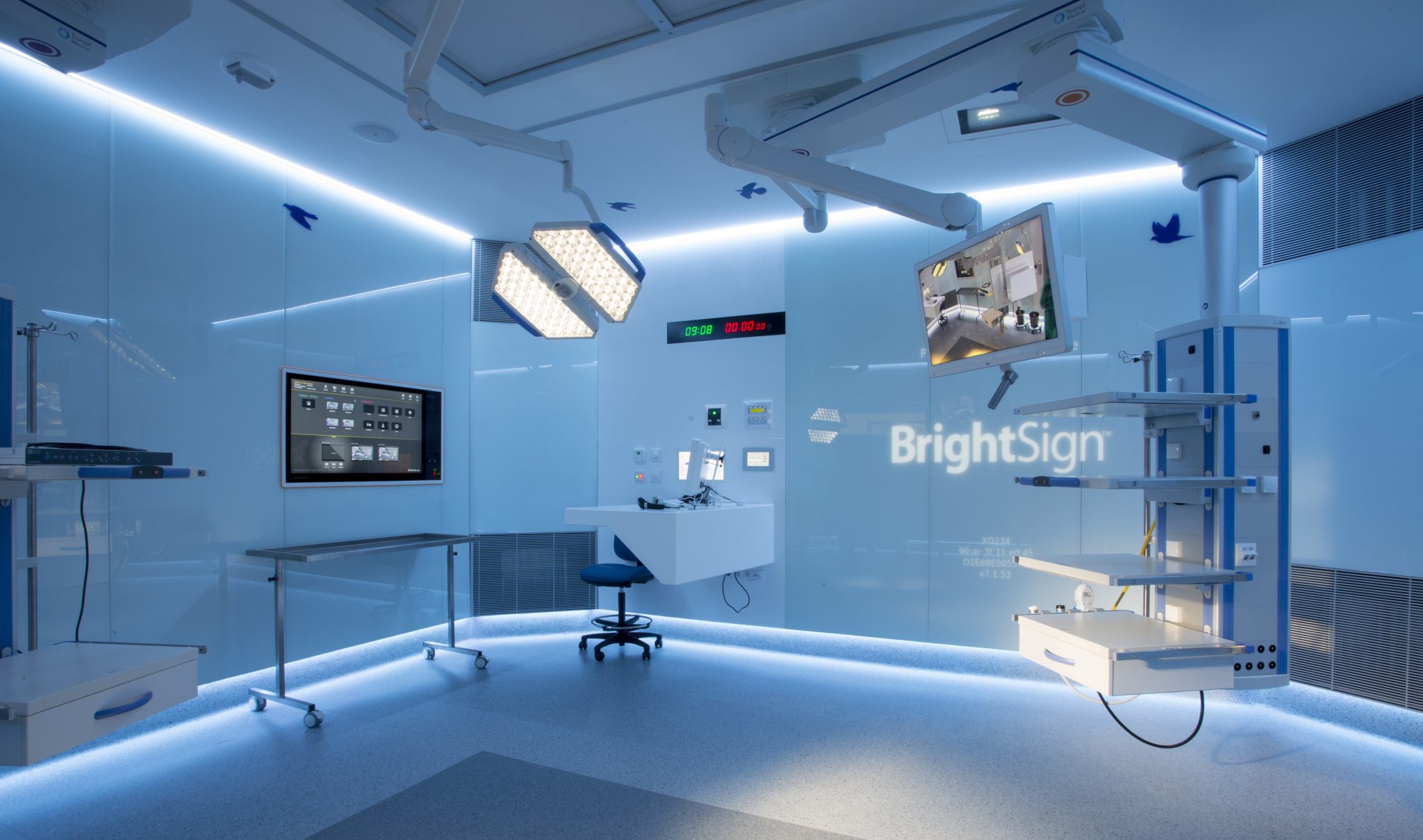
Recently, with the COVID-19 pandemic, architecture and healthcare have experienced a similar phenomenon, and new demands for diagnosis and treatment have accelerated technological advances. The emergence of new hybrid operating rooms with advanced diagnostic imaging devices has introduced a paradigm shift in the design of healthcare buildings.
The hospitals of the future must therefore be designed with more and more space dedicated to diagnostics and a constantly growing technology plate. Advanced machinery and the presence of hybrid operating rooms require larger structural meshes and greater heights capable of accommodating the higher technical facilities.
The new hospital must be a flexible and adaptable machine, and capable of functioning as a hospital inside the hospital in case of future pandemics. This implies the need to design under certain premises:
- Large waiting areas with facilities that allow their temporary use as treatment spaces.
- Circuits that can be dedicated exclusively to infectious patients, if necessary.
- Outdoor areas that can be used temporarily.
- New communication systems to facilitate telemedicine and improve flow management.
PINEARQ has made this idea a tangible reality in the projects it is developing. The innovations introduced from COVID19 have also been integrated in the executive project of new CHUAC in Galicia or in the new Surgical Block of the Hospital Sant Joan de Déu in Barcelona, recently completed.
Specifically, the CHUAC, a highly complex hospital center, will house a large diagnostic imaging area with a total of 46 rooms, 15 X-ray rooms, 15 ultrasound rooms, 2 mammography rooms, 2 orthopantomography rooms, 1 densitometry room, 5 CT, 3 MRI and 3 angiography rooms, highlighting the importance of these areas.
This article is based on the conference given by Albert de Pineda at the annual CNETO congress “Le nuove sfide dell’ospedale 4.0: Ripensare l’area di diagnostica per immagini”, held on November 24, 2024 in Camogli, Genova, with the participation of experts in the fields of imaging, AI and diagnostic equipment.