
Santa Elisabetta in Bressanone, highlighted for its sustainable development by the ZAB Zukunftsagentur Bau platform
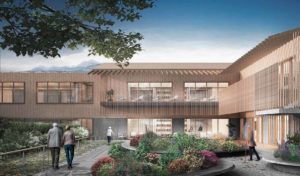
The new Santa Elisabetta residence in Bressanone, located in northern Italy, has been incorporated as a case study in the interactive innovation map promoted by ZAB Zukunftsagentur Bau.
The Austrian platform connects and supports companies involved in the field of construction research and innovation through education and communication programs, with the aim of strengthening the industry for future challenges.
The selected projects are built under the circular economy model. This manufacturing model involves extending the life cycle of products by repairing, renewing and recycling materials as many times as possible. This system fights against the traditional throwaway economic model and against planned obsolescence.
The Italian residence, designed by PINEARQ, Cooprogetti Scrl and Solarraum Srl, has been selected for proposing a sustainable development based on five complementary characteristics:
- Verification of comfort and low impact on the built and natural environment.
- Environmental sustainability: care and protection of nature is guaranteed, managing efficiently and responsibly the natural resources with preservation.
- Efficiency of mechanical and electrical systems: Energy optimization.
- Energy efficiency: Ability to maximize the use of energy, minimizing consumption without sacrificing the comfort or productivity of its occupants.
- Social, business and economic sustainability.
The project also responds to the guidelines of the German architectural principles for residences, which indicate the need to make private life compatible with the social sphere. The building is eligible for the CasaClima Nature seal, the Italian sustainability certification for buildings that reduce their negative impact on the environment and improve people’s health and well-being.
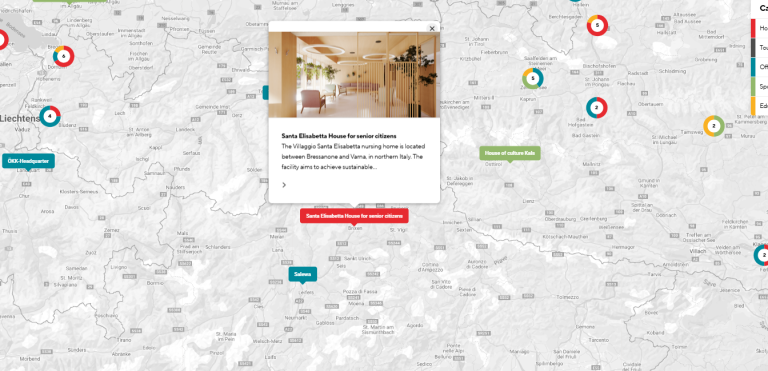
Materials with a high percentage of recycled, recoverable or recyclable components were used in the construction of the residence, such as wood for the interior partition structure, linoleum flooring, wood structure for the roof, ceramic and bricks, false ceilings, etc. In total, the project has 6,822 tons of recycled materials, 21% of the total material of the project.
At PINEARQ we work every day to reduce our carbon footprint. Annually we try to strengthen the circularity of the buildings to minimize the environmental impact by following a series of measures such as the use of 100% post-consumer recycled aluminum in all projects of the studio or the extensive library of materials that we have created, highlighting those with lower carbon footprint, either by having a % of recycled or recyclable material or by the type of extraction of raw materials, thus creating buildings under the circular economic model.